
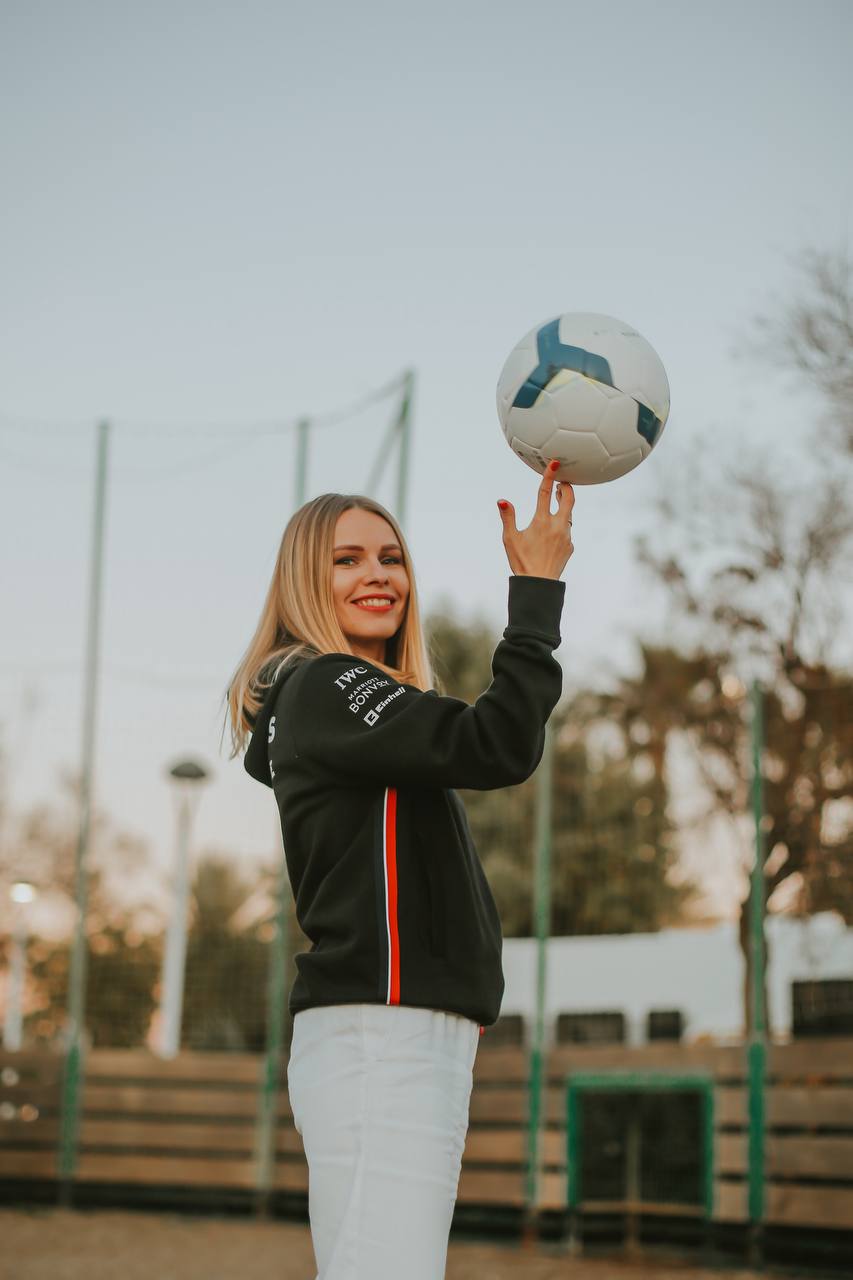
– Country of origin: Russia
– Current position and company: Mental performance coach in sports + private practice + Awesomesports Football Academy (Spain)
– Education:
Higher education in Journalism and Management
Specialized training:
Team Coaching, Global Coaching University
“Psychology for High-Performance Sports”, Barca Innovation Hub (Spain)
“Grassroots Football Management”, Russian Football Union Academy
Coaching (Level 1), International Coaching Federation (ICF)
– Work experience:
Projects in Sports (2+ years):
Sports disciplines:
- Football
- Athletics
- Powerlifting
- Triathlon
Geographical reach:
- Germany
- Russia
- Spain
- UAE
- South Africa
One of my key initiatives is the international online conference “The Mental Side of Football: Experts on Mental Strength,” which I organized and hosted in the spring this year. The event featured speakers from 8 countries and attracted participants from 72 cities worldwide.
– Professional achievements: My achievements are reflected primarily in client feedback at this stage. I also consider the successful creation and execution of the international conference a major accomplishment, as I organized it fully on my own from start to finish.
– Why do you work in sports/ what brought you into the industry: I’ve always felt drawn to sports—it’s where I truly belong. I also love helping people realize their full potential. I often see more in them than they see in themselves, and it brings me genuine joy to support that process of growth.
– What would you like to contribute to or change in the sports industry:
- End the stigma around athletes and coaches working with psychologists or mental performance coaches
- Make psychological or coaching support mandatory for coaches (similar to annual health check-ups—a great tool to prevent burnout and more)
- Improve infrastructure and access to grassroots and professional sports facilities (depending on the country)
- Reform the way sports ministry and federation leaders are appointed—ensuring these roles are held by people who truly understand how sports systems work
- In post-Soviet countries, change the outdated approach to youth sports training
- Create more equal conditions for men’s and women’s sports (as men often have significantly better support and resources)
 Las Campeonas
Leave a comment